

Attic Conversions and Heritage Slate Roofs in Sydney: What Homeowners and Builders Need to Know
An attic conversion can add one or two liveable rooms without touching a home’s footprint. On a heritage property with a slate roof, the roof itself becomes one of the most important early decisions, and it may be more of an advantage than you’d expect.
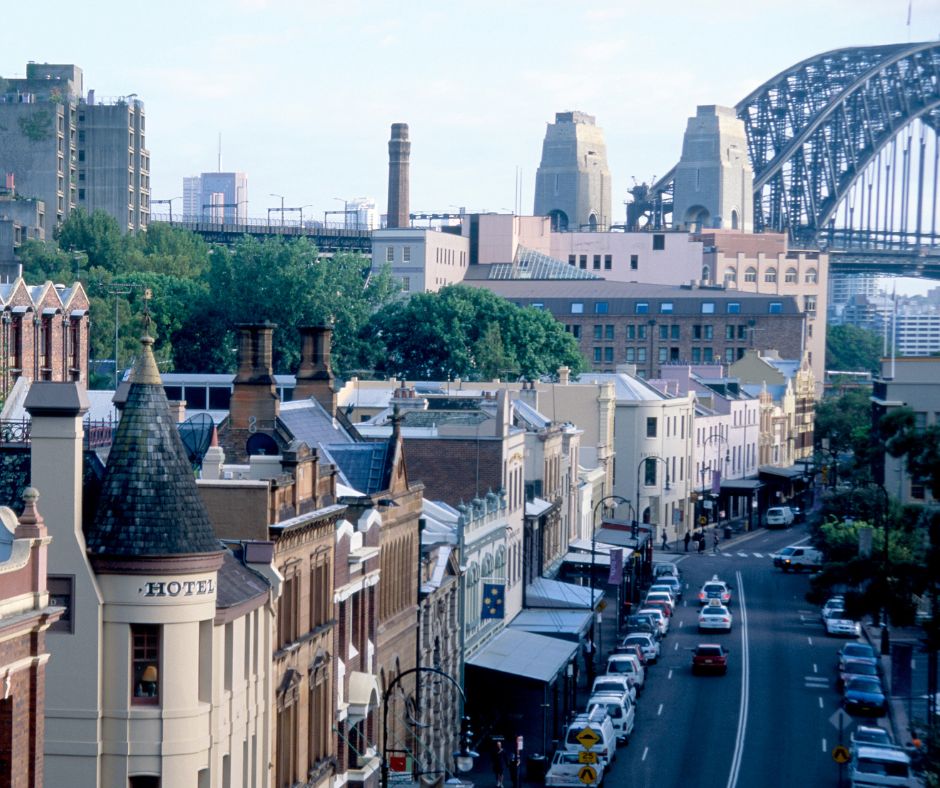
Sydney’s inner suburbs, Paddington, Glebe, Balmain, Leichhardt, Newtown, Rozelle, are full of Federation and Victorian terrace homes sitting on small blocks. Extending outward isn’t always possible. Building up isn’t an option for most of them either. An attic conversion is often the only realistic way to add a bedroom or two without moving house.
It’s an idea whose time is coming in Sydney. And for homes with an original slate roof, getting the roof properly understood early is what makes the whole thing work, and what turns a common concern into a genuine advantage.
An Idea Whose Time Is Coming
Attic conversions have been standard practice in the UK for decades. In cities like London and Manchester, converting the roof space is simply what you do when you need more room, the housing stock is right for it, the planning rules have evolved around it, and specialist builders are everywhere.
Sydney is catching up. The same conditions that drove the UK trend are now firmly in place here: expensive inner-city land, tight blocks, a large stock of Federation and period homes, and property prices that make moving house a significant financial decision. For a long time, Australians defaulted to rear extensions or knockdown-rebuilds when they needed more space. That made sense when land was cheaper. It makes less sense now.
A handful of specialist attic conversion companies are already active in Sydney, and the enquiry rate is growing. For homeowners on small inner-city blocks who have always assumed the only options are extend, subdivide, or sell, the roof space above them is worth a serious look.
Is an Attic Conversion a Good Idea?
On the right property, absolutely. The case for it is straightforward: you gain one or two habitable rooms without increasing the building’s footprint, without a ground-level extension, and without the disruption of a full rebuild. In Sydney’s inner suburbs, where land is expensive and blocks are tight, that’s a genuinely compelling proposition.
The practical questions come down to two things: does the roof space have enough height to work with, and what condition is the existing roof in? Both of those are answerable early, before significant money is spent on design or approvals. Getting a structural assessment and a roof condition report done at the start of the process gives homeowners a clear picture of what they’re working with, and in most cases, the answers are more encouraging than people expect.
Won’t It Be Unbearably Hot? Why Slate Is Actually a Bonus
This is the first thing most people ask about attic conversions in Sydney. The assumption is that a room directly under the roof will be a heat trap in summer, and it’s a reasonable concern. But on a slate roof, a well-designed conversion will be more temperature stable than most people expect.
Yes, you will need cooling in summer. But it won’t be the oven that the assumption suggests.
Natural slate has high thermal mass. It absorbs heat slowly during the day and releases it gradually, rather than transmitting temperature spikes directly into the space below.
Metal roofing does the opposite, it heats and cools rapidly, and the room beneath it feels every degree of a Sydney afternoon. Slate acts as a buffer, and that makes a real difference to how the finished space performs.
Combined with quality sarking and insulation correctly installed between the rafters, a slate roof gives the design a head start that other roofing materials simply don’t provide.
In Sydney’s climate, where the western-facing rooms of inner-city terrace homes can be punishing in summer, that thermal stability is a meaningful advantage. For heritage homes where the slate is being retained as part of a conversion, it’s worth understanding that the roof above you is already doing more thermal work than most people realise. A good designer and a properly assessed roof can build on that, rather than fight against it.
What Heritage Constraints Actually Mean
Properties in Sydney’s heritage conservation areas are subject to planning controls that affect what can be done with the roof. The specifics vary by council, but the general picture is consistent, and worth understanding rather than being daunted by.
Roof pitch and ridge line cannot be changed. You cannot raise the height of an existing heritage roof or alter the ridge line. This is the constraint that rules out conversions on some properties, but many Federation and Victorian terraces have enough existing height in the roof space to work within those limits.
Street-facing alterations are restricted. Dormer windows on the front facade are generally not permitted on heritage properties. Skylights are usually acceptable but must sit flush with the roofline. Rear dormers, where the property allows them, are typically less restricted, and on many inner-city terraces, it’s the rear that faces a lane or garden rather than the street.
A Heritage Impact Statement will likely be required. Most inner Sydney councils require a Heritage Impact Statement for work on a listed property or within a conservation area. This is a document prepared by a heritage consultant that demonstrates the proposed work doesn’t adversely affect the heritage significance of the building. It’s a real step in the process, but it’s a normal one, heritage architects and consultants work on these routinely, and the process is well-understood.
Approvals come via DA. Heritage properties almost always require a Development Application rather than a Complying Development Certificate. DAs take longer and involve more scrutiny, but they are not a barrier, they’re simply the right pathway for this kind of work.
What Happens to the Roof
This is where a specialist slate roofer becomes a useful part of the project team from early on, not just a subcontractor called in at the end.
The existing slate roof needs to be assessed before design work gets too far advanced. The key questions are straightforward: what condition is the roof in, how much life does it have left, and what does that mean for the project?
There are broadly two outcomes from that assessment, and both are workable.
The roof can be retained and worked around. If the slate is in good condition, sound fixings, intact sarking, no significant movement or water ingress.
It may be possible to complete the conversion with the roof largely untouched. This is the best outcome for heritage compliance and for budget, and it’s more common than people assume on well-maintained period homes.
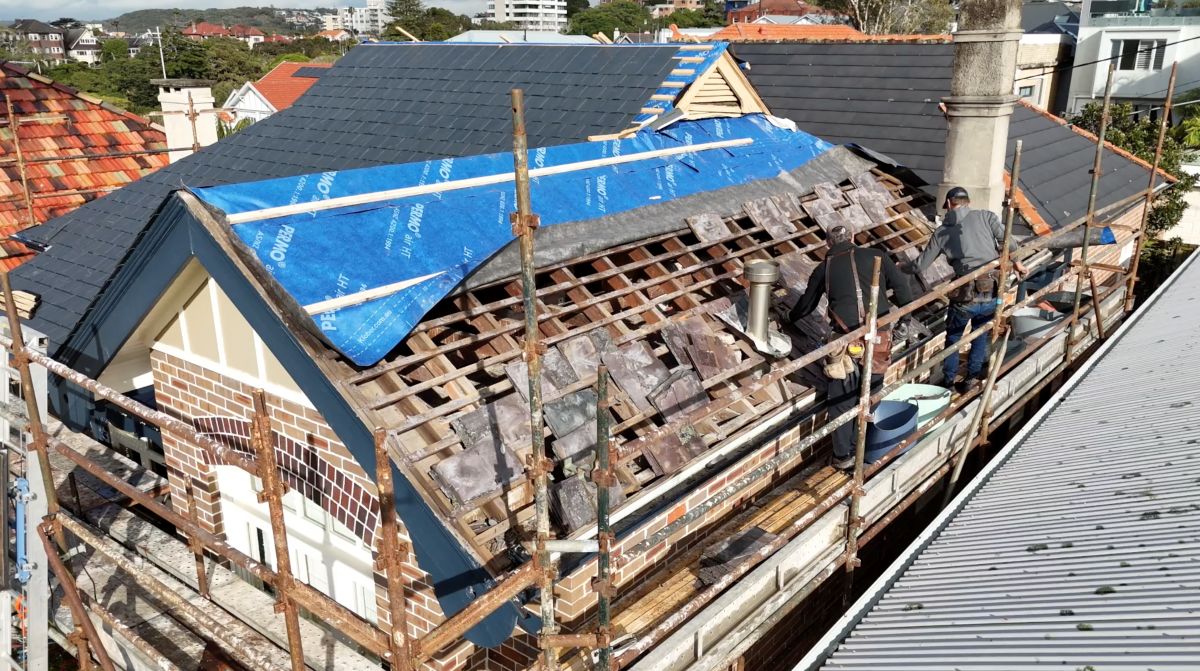
The roof needs replacing. If the roof is at or near the end of its life, the conversion becomes an opportunity to do both jobs at once. A full re-roof can be staged alongside the conversion work, with new materials specified to heritage requirements. On a listed property, that almost always means natural slate, a like-for-like replacement that satisfies council and performs for another century. The thermal benefits of the new slate roof are there from day one.
Either way, knowing the roof’s condition early means the project is scoped and priced accurately from the start. There are no expensive surprises halfway through.
What Builders Need to Know
For builders managing attic conversion projects on heritage properties, the slate roof is a specialist scope that sits outside standard building work. It needs someone who understands both the material and the heritage planning context.
Bringing a specialist slate roofer in at assessment stage, before DA lodgement, gives the project team accurate information about roof condition, likely lifespan, and what council will require in terms of materials and method. That information shapes the DA documentation, the project programme, and the budget. It also means the heritage architect and the roofing contractor are working from the same set of facts, which makes approvals smoother.
We work with builders across Sydney on exactly this basis. We assess the existing roof, provide written condition reports, advise on heritage compliance requirements, and carry out the roofing work, whether that’s retention and repair or full replacement, as part of the broader project.
The Suburbs Where This Comes Up Most
The inner west and inner east are where this combination of tight blocks, heritage listings, and original slate roofs comes together most frequently. Paddington, Glebe, Balmain, Rozelle, Leichhardt, Newtown, Annandale, and Erskineville are the suburbs where we see the most enquiries of this type. These are also the suburbs where land values have risen most sharply, and where the financial case for making the most of an existing footprint is strongest.
The Northern Beaches has its own stock of heritage homes, but for attic conversions on heritage slate roofs, the inner city is where most of the opportunity sits.
Where We Fit In
We don’t do attic conversions. We assess and work on the roof, the slate, the sarking, the battens, the fixings, the ridge treatment, and we do that work in a way that meets heritage council requirements.
If you’re a homeowner considering a conversion on a heritage property, or a builder with a slate roof as part of your project scope, we’re happy to come out, assess the roof, and give you a straight picture of what you’re working with. In most cases, it’s a more encouraging conversation than people expect.
Call us on 0431 593 625 or contact us here

Frequently Asked Questions
Is an attic conversion worth doing on a Sydney heritage home?
For many inner-city properties it’s one of the most practical ways to add liveable space. On a small block where extending outward isn’t possible and a knockdown-rebuild doesn’t stack up financially, the roof space is often the only option. Whether it works for a specific property depends on the available height in the roof space and the condition of the existing roof, both of which can be assessed early, before significant money is committed.
Won’t a room under a slate roof be too hot in summer?
This is a common assumption, but slate actually works in your favour. Natural slate has high thermal mass, it absorbs heat slowly and releases it gradually, which moderates temperature swings rather than amplifying them. Combined with quality sarking and correctly installed insulation between the rafters, a well-designed slate roof assembly supports a comfortable, year-round room. It’s a better starting point thermally than metal roofing by a significant margin.
Does heritage listing rule out an attic conversion?
Not necessarily. Heritage controls restrict what can be changed, roof pitch, ridge line, and street-facing alterations, but many Federation and Victorian terraces have enough existing roof height to work within those limits. Rear dormers are often less restricted than front-facing ones. A heritage architect can advise on what’s achievable for a specific property, and a slate roof specialist can confirm whether the roof itself supports the project.
What approvals are needed for an attic conversion on a heritage property in Sydney?
Most heritage properties in Sydney require a Development Application rather than a Complying Development Certificate. A Heritage Impact Statement prepared by a heritage consultant will also typically be required. This documents how the proposed work respects the heritage significance of the building. The process is well-established and handled routinely by heritage architects and consultants working in the inner suburbs.
Does the existing slate roof need to be replaced for an attic conversion?
Not always. If the slate is in good condition, sound fixings, intact sarking, no significant water ingress or movement, it may be possible to complete the conversion with the roof largely untouched. If the roof is near the end of its life, the conversion becomes an opportunity to re-roof and convert at the same time, with the new slate specified to heritage requirements. A condition assessment early in the project determines which path applies.
How does a slate roof condition assessment work?
We inspect the roof in person, checking the condition of the slate, the fixings, the sarking, the battens, and the ridge treatment. We provide a written report on what we find, how much life the roof has left, and what would be required from a roofing perspective to support the conversion. That report can be used by the project architect and referenced in the DA documentation.
Can you work alongside an attic conversion builder on a heritage project?
Yes. We work with builders across Sydney at assessment stage and through the construction phase. Our role is the roof, assessment, condition reporting, heritage compliance advice, and the roofing work itself. We don’t do the conversion, but we make sure the roof component is properly handled as part of the broader project.
Which Sydney suburbs are most suited to attic conversions on heritage slate roofs?
The inner west and inner east have the highest concentration of the right conditions, Federation and Victorian terraces on tight blocks with original slate roofs and heritage listings. Paddington, Glebe, Balmain, Rozelle, Leichhardt, Newtown, Annandale, and Erskineville are where we see the most enquiries of this type. The Northern Beaches also has a stock of heritage homes, though the inner city is where this combination comes together most frequently.
How do I get started?
Call us on 0431 593 625 or submit a contact form.
We’ll come out and for a roof assessment of what you’re working with. For builders, we’re happy to be brought in at any stage of the project, the earlier the better.


Our Services
Get A Free Quote
Get in touch today for a free, no-obligation quote on your roofing needs.