
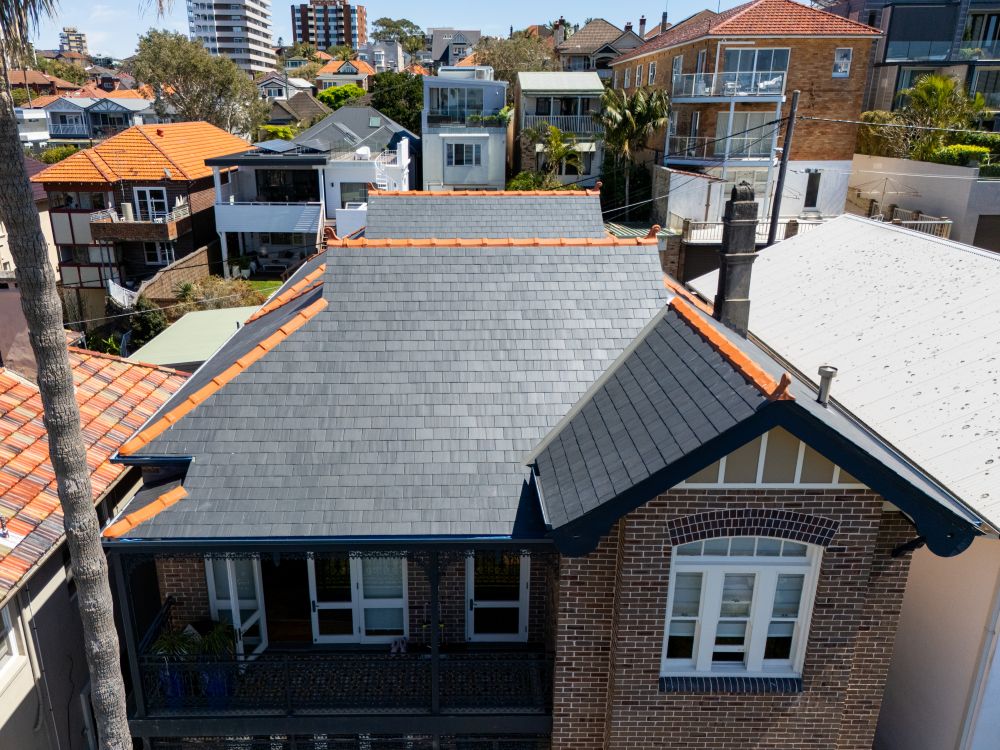
Extending Your Heritage Slate Roof? Here’s What 90% of Homeowners Actually Do
You’ve got a slate roof on your heritage home, and now you’re adding an extension. So what goes on the new section?
In our experience across Sydney’s heritage suburbs, 9 out of 10 homeowners go with slate, usually reclaimed, sometimes new. The reasons are practical, not sentimental: it’s what councils want on visible additions, it’s what protects your home’s value, and it’s what looks right next to the original roof.
Colorbond comes up for a small slice of jobs, strictly rear extensions, not visible from the street, where council is relaxed and the budget needs trimming. It’s the exception, not the default.
Here’s why slate wins this one almost every time, and how to think about your options.
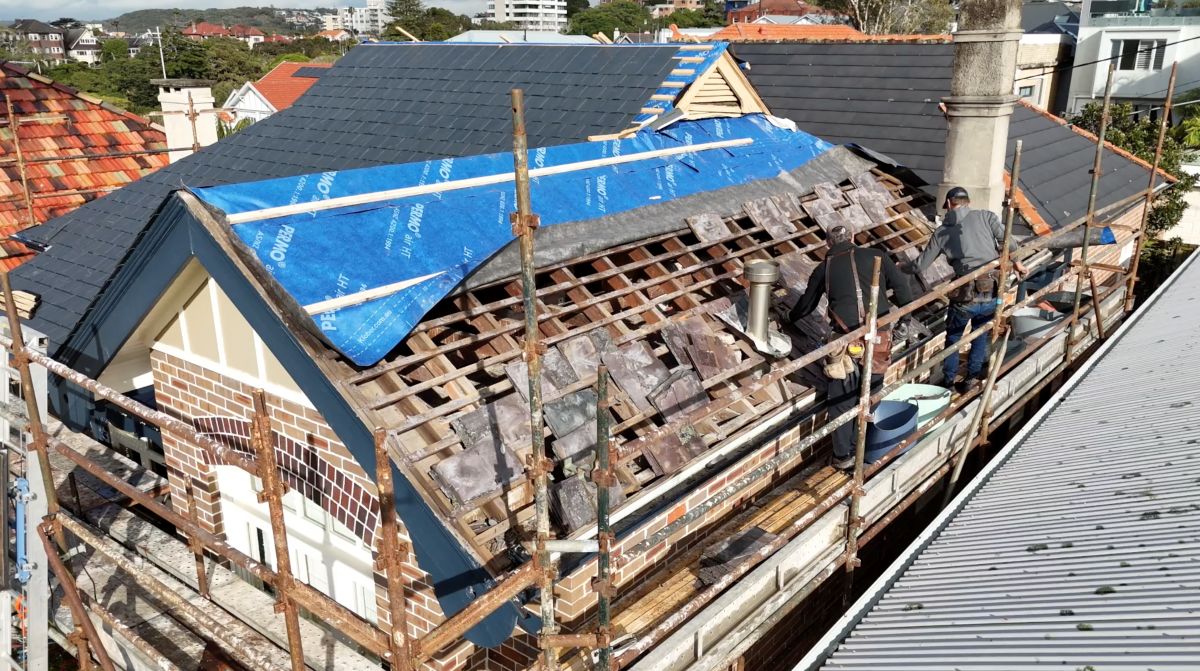
Why Slate Is the Default for Heritage Extensions
Three reasons, in order of importance:
- Councils prefer it. Heritage Conservation Areas across Sydney’s Inner West, North Shore, Eastern Suburbs and Hunters Hill have Development Control Plans that require like-for-like materials on visible additions. Slate matches slate. Colorbond doesn’t.
- It protects your home’s value. A heritage home with a slate roof is worth what it’s worth partly because of the slate. Patching Colorbond into a visible addition reads as a compromise, and the next buyer’s agent will price it that way.
- It actually looks right. Slate has texture, depth, and slight irregularity because it’s natural stone. Colorbond is flat and metallic. Even the best colour match doesn’t disguise that the two materials are fundamentally different.
Most homeowners look at those three reasons and land on slate before cost even enters the conversation.
Reclaimed Slate: The Default Choice
Reclaimed slate, old tiles salvaged from demolished or re-roofed buildings, is what most homeowners end up using, and it’s the option a good slate roofer will steer you toward first.
What you get:
- The closest possible colour and texture match to your existing roof, often indistinguishable
- Proven material, if it’s survived 80+ years on another Sydney roof, it’s good slate
- The strongest position with heritage consultants and council
- Environmental tick, reusing existing material instead of quarrying new stone
The catch:
Reclaimed slate isn’t always available in the exact size and quantity you need on demand. A good supplier holds stock of common Sydney profiles, but if your extension needs a specific size in volume, the right batch might take a few weeks to come together. Your roofer needs to sort and grade every tile, chips, hairline cracks, wrong nail-hole positions all get culled.
Cost: From around $300 per square metre installed when supply is good. If you need a specific profile and supply is tight, expect to pay more.
New Slate: When Reclaimed Isn’t Available
When reclaimed supply doesn’t line up with your timeline, new slate is the next call. Welsh, Spanish, and Chinese are the three sources you’ll see quoted.
- Welsh slate is the traditional choice, what most original Sydney heritage roofs were laid with in the 1800s. The longest track record, the most consistent quality.
- Spanish slate is a solid mid-range option and the dominant imported slate in Australia now.
- Chinese slate varies wildly. Some quarries produce excellent material; others produce stone that delaminates within a few years. Hard to tell the difference without industry knowledge.
What you get:
- Consistent thickness and sizing across every tile
- Predictable supply if your builder is on a tight programme
- A roof that will last 80 to 100+ years if installed properly
The catch:
New slate won’t match your existing roof immediately. It needs years to weather in, typically 5 to 15 years before it starts to blend convincingly with old slate. Reclaimed gets you there straight away.
Cost: From $350 per square metre installed for new Welsh slate. Spanish sits a touch lower. Chinese lower again, with the risk profile rising as the price drops.
Colorbond: The Exception, Not the Rule
Colorbond comes up for a specific scenario: a rear extension that isn’t visible from the street, on a property where council won’t object, where the homeowner wants to redirect budget elsewhere.
That’s a small slice of heritage jobs. For most homeowners, Colorbond doesn’t make the shortlist, councils push back, the visual mismatch is obvious from any angle, and the long-term value of the home takes a hit.
If your extension fits the narrow profile where Colorbond actually works, strictly rear, not visible from any public place, council approved, it’ll save you on materials. From around $120 per square metre installed compared to $300+ for slate.
But confirm with your council and your roofer before you bank that saving. We’ve seen homeowners get a Colorbond design through DA only to be told at construction stage that visible portions need to come back to slate, at which point the saving evaporates.
What About Mixing Materials?
Mixed roofs aren’t unusual, slate on the original, something else on a rear addition. They can look fine when the design and detailing are right, and terrible when they’re not.
What makes the difference is the junction:
- Step flashings, apron flashings, and lead work that creates a clean watertight join
- A roofline design that lets the new section tuck under or sit cleanly below the original ridge
- Avoiding mid-roofline material changes at the same height, those are hard to pull off
A good slate roofer will tell you up front whether the design supports a mixed roof or whether you’d be better off staying in slate the whole way through.
Heritage and Council, What You Need to Know
If your home is heritage-listed or sits in a Heritage Conservation Area (HCA), check council before committing to anything. Common across Sydney’s Inner West, North Shore, Eastern Suburbs, and Hunters Hill, anywhere with a concentration of federation and Victorian-era homes.
Each council has a Development Control Plan with specific provisions about roofing materials on heritage properties. Most require like-for-like materials on any visible addition, which lands you on slate, new or reclaimed.
Confirm this early, before architectural drawings are paid for. Plenty of owners have got all the way to DA submission with a Colorbond design only to have council require slate on the visible sections.
Frequently Asked Questions
Why do most homeowners go with slate instead of Colorbond?
A few reasons stacked together. Council is the biggest one, visible additions on heritage homes almost always need to match the original material, and slate matches slate. Beyond council, there’s the home’s value: a slate roof is part of what a buyer’s paying for, and patching Colorbond into the visible roofline reads as a compromise. And finally, the visual difference between slate and Colorbond is obvious no matter how careful the colour match. Most owners look at all three and land on slate.
Is reclaimed slate as good as new slate?
For a heritage extension, often better. Reclaimed slate that’s already survived 80 to 100 years on a Sydney roof has proven itself, and it matches your existing roof in colour and texture in a way new slate never will until decades have passed. The only catch is supply, you can’t always get the exact quantity and size you need on demand. A good slate roofer will know what’s available and what’s coming up.
What if reclaimed slate isn’t available for my extension?
That’s where new slate comes in. Welsh slate is the gold-standard substitute, same source as much of Sydney’s original heritage roofing. It won’t match your existing roof immediately, but it weathers in over 5 to 15 years and outlasts most other materials by a wide margin.
Can I use Colorbond on a heritage-listed home at all?
On the primary roof or anywhere visible from the street, almost certainly not. On a strictly rear extension that isn’t visible from any public place, some councils will accept it if the colour is sympathetic. Confirm with council and your heritage consultant before going down that path, because if council says no at DA stage you’ll be reworking the whole design.
How do I know if my home is in a Heritage Conservation Area?
Most Sydney councils have online heritage maps where you can search your address. You can also call council’s planning department and ask directly, they’ll tell you over the phone. Worth doing this before you spend money on architectural drawings.
Do I need a specialist slate roofer or can any roofer do it?
You need someone who works with slate regularly. Slate installation is a different skill set from metal roofing or tiling, tiles need to be sorted by thickness, individually assessed, and hand-punched for nail holes. The flashing detail where a new slate section meets an existing one needs proper lead work, which most general roofers don’t do day-to-day. Get this wrong and you’ve got leaks, cracked tiles, and a roof that looks amateur next to your carefully maintained original. Ask to see slate-specific examples, not just general roofing jobs.
Need Advice on Your Extension Roof?
If you’re extending a heritage home in Sydney and you’re working out the right roofing material for the addition, give Slate a call.
We work with new and reclaimed slate across Sydney’s heritage suburbs every week. We’ll look at what you’ve got, confirm what council will and won’t accept, and give you a straight answer on what’s available, what it’ll cost, and how long it’ll take.
Call Slate, 0431 593 625, or get in touch at https://slateroofrestorations.com.au/Home
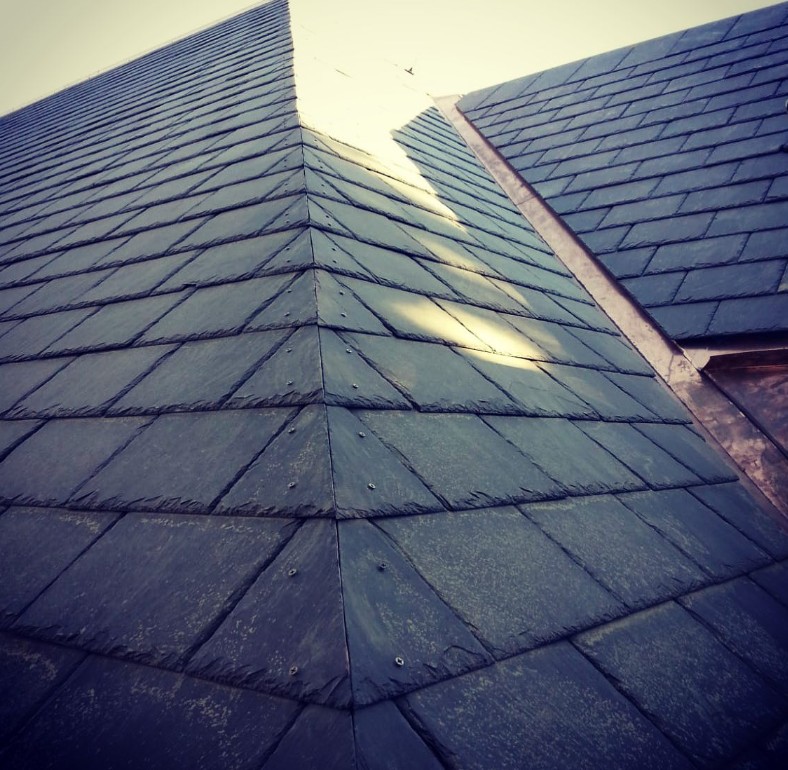

Our Services
Get A Free Quote
Get in touch today for a free, no-obligation quote on your roofing needs.